1 min read
I Built an AI Agent in 10 Minutes. Here's Why That Matters for Process Improvement
Last week I opened up Microsoft 365 Copilot, clicked "Create Agent," and pasted a 10-item checklist for staffing request completeness. Then I tested...
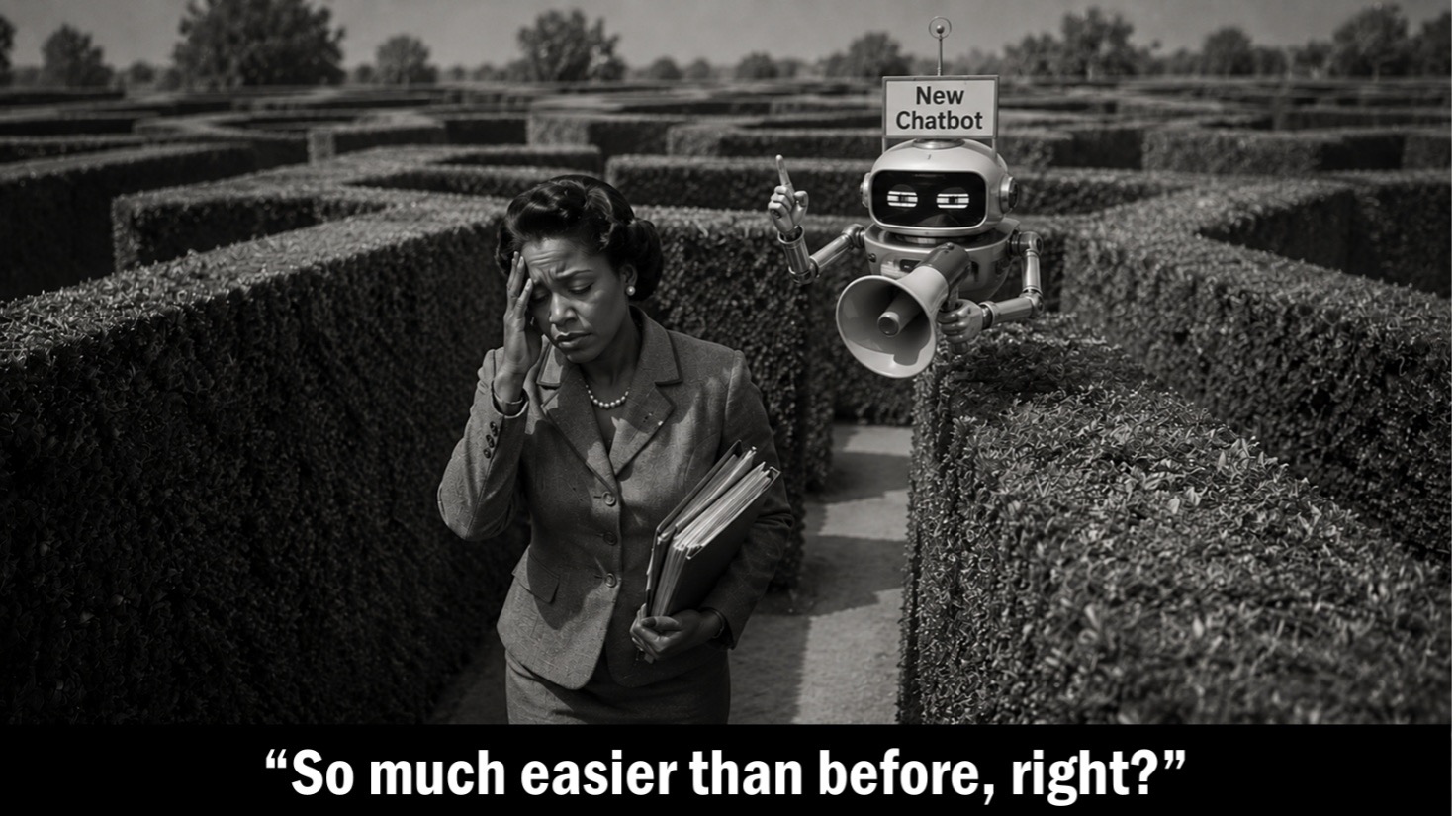
Once you build a chatbot for a bad process, something interesting happens. The chatbot develops a constituency. It has a project team, a budget line, a vendor relationship, and a shiny success story in someone’s performance review. And that constituency has a strong incentive to keep the chatbot alive - even when the smarter move is to simplify the process so the chatbot isn’t needed.
This is the AI Investment Trap.
This anti-pattern isn’t unique to AI. Organizations have invested in CRM systems, ERP platforms, and other tools that ended up protecting broken processes.
What’s different with AI is that the visible win comes faster, the political cost of admitting failure is higher, and the technology starts optimizing the existing process. That makes redesign harder later. The AI investment trap is a faster, more entrenched version of a problem we’ve seen before.
The trap plays out in three stages.

“We improved the percentage of perfectly filled-in forms at intake from 30% to 75%!” That might be true - and it still might miss the point. If much of the information is already available in systems the organization owns (or shouldn’t be collected at all), the chatbot didn’t solve the underlying process design problem. The metric improved. The process may not have.
Someone suggests redesigning the form from 14 fields to 4. The response: “We can’t redesign the form now - we just invested in a chatbot that uses those 14 fields.” The technology that was supposed to improve the process now protects the broken process from being improved. Every month the chatbot runs, the sunk cost argument gets stronger and the appetite for redesign gets weaker.
The hiring manager doesn’t want a chatbot. They want a form with 4 fields they can understand without calling for help. You’ve spent the budget, locked in the complexity, and the person filling out the form is still frustrated.
Why does this keep happening? Because building a chatbot feels like progress. It’s visible, fundable, and produces a deliverable with a launch date. Simplifying a form feels like maintenance. Nobody gets promoted for deleting four fields and rewriting three labels - even though that’s the intervention that would have solved the problem in a week for essentially nothing. Organizations reward building. They rarely reward removing.
What can a practitioner do about it? Name it early. If you’re in the room when someone proposes an AI solution, recall the five questions to ask out loud before the idea gains momentum. The investment trap only works if nobody challenges the sequence. Once you’ve asked, “can we simplify the process first?” in front of the sponsor, the conversation has to address it. You don’t need authority to ask the question. You just need the timing.
And if you’re already past Stage 1 - if the chatbot is built and the constituency is real - you can still run the simplification in parallel. Remove the fields nobody uses. Pre-populate what you can. Then show the sponsor that the chatbot is now handling three fields instead of fourteen and ask users which they prefer.
Don’t make the wrong thing easier instead of making the right thing simple.
Key takeaways:
Explore our public training programs.
Training ProgramsTalk to us about a working session for your team.
Book a Consultation
1 min read
Last week I opened up Microsoft 365 Copilot, clicked "Create Agent," and pasted a 10-item checklist for staffing request completeness. Then I tested...
1 min read
The backlog is the great shame of the public service. It fills staff with dread, leaders with pressure and clients with frustration. Every team that...
1 min read
We mapped our process and we’ve found waste everywhere, maybe we even have some ideas about what to do about it. Now we need to decide how we will...