2 min read

Five Questions to Ask Before You Build a Chatbot

Five Questions to Ask Before You Build a Chatbot

Chatbots are the new shiny object. Many process improvement presentations I’ve sat through lately include a recommendation for a chatbot somewhere. “Guide the client through intake”. “Answer FAQs”. “Validate form fields”.

Sometimes that's the right answer. Often it isn't. Here's how to tell the difference.

Before your team invests in a chatbot, work through these five questions in order. The first four are about form redesign. Only the fifth is technology.

This post focuses on chatbots assisting end-users/clients in filling out forms because it is the most common AI scenario I hear leadership groups asking about. However, the same five questions apply to any AI deployment: document processing, data classification, meeting summarization, etc. Substitute your AI use case for 'chatbot' and the questions still hold.

1. Why is this form so complex?

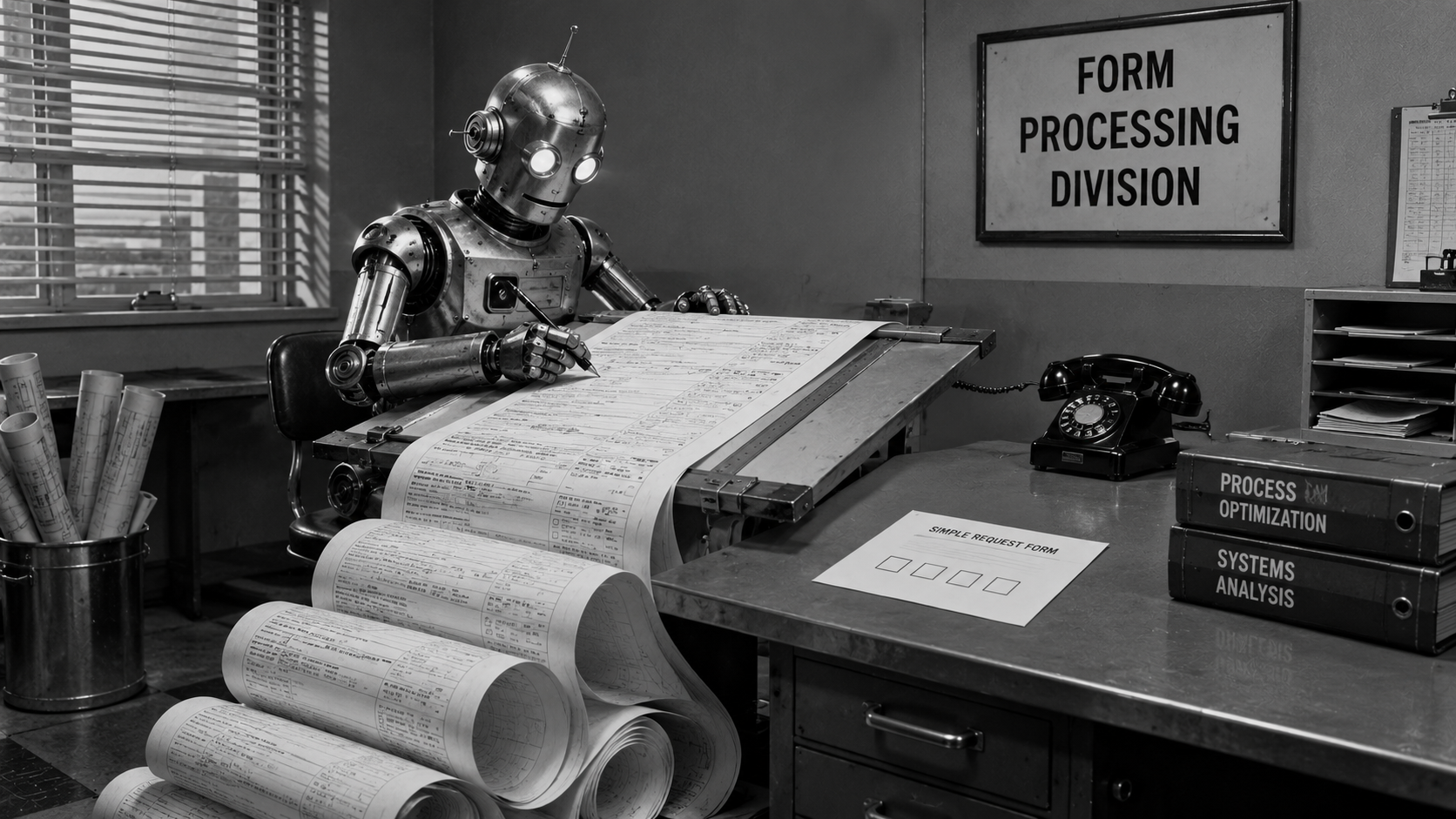
Is the complexity essential? Are all the fields required for regulatory or legal reasons? Or is it simply accumulated form design debt that nobody has cleaned up in years? If a form grew to be complicated because people kept adding fields without removing old ones, the answer isn't a chatbot. It's a cleanup.

2. Which fields can be eliminated entirely?

If nobody uses the output of a field on a form, remove the field. Don't build technology to help users fill in information that goes nowhere.

3. Which information do we already have?

If the organization already knows the department code, the cost centre, and the job classification from last time - pre-populate it in the form or omit the fields altogether. Don't ask the client to provide what you already know.

4. Can we rewrite in plain language? Make it more intuitive?

Here's my favourite test: if a field needs a chatbot to explain what it means, the instructions - or even the label itself - are poorly written, not poorly understood. Rewrite the field. Then test it with real users and refine it until first-timers can get it right without help 19 times out of 20. You might find that you do not need the chatbot at all (which your users/customers probably dislike anyhow!)

5. What's left after questions 1-4? That's where AI belongs.

If there are required fields that are genuinely complex and expert guidance would add real value to the end-user’s experience, build the chatbot. But build it for the simplified form, not the original mess.

The organizations that get this right save resources twice: once by not building unnecessary technology, and again by having a simpler process that's cheaper to maintain and improve. The ones that skip to question 5 end up with a chatbot that protects the very complexity they should have removed in the first place.

This five-point-checklist is also a great tool to use before piloting any solution experiment. Try it out!

Key takeaways:

  • The first four questions are about form redesign. Only the fifth is AI.
  • If you can't answer questions 1-4, you're not ready for question 5.
  • A field that needs a chatbot to explain it is a badly written field.
  • Simplify for the client. Don't add technology to compensate for complexity they shouldn't face.
  • The cheapest chatbot is the one you didn't need to build.
Chatbots: Are We Automating What Should be Eliminated?

1 min read

Chatbots: Are We Automating What Should be Eliminated?

A team in HR builds a chatbot to walk hiring managers through a 14-field hiring request form. It takes three months and a meaningful chunk of their...

Read More
Building Your Team the Smart Way - First Followers and the Art of Creating a Movement

1 min read

Building Your Team the Smart Way - First Followers and the Art of Creating a Movement

One of the most common mistakes Lean practitioners make is spending enormous energy trying to convince every skeptic in the room. They host...
Read More
The AI Investment Trap

1 min read

The AI Investment Trap

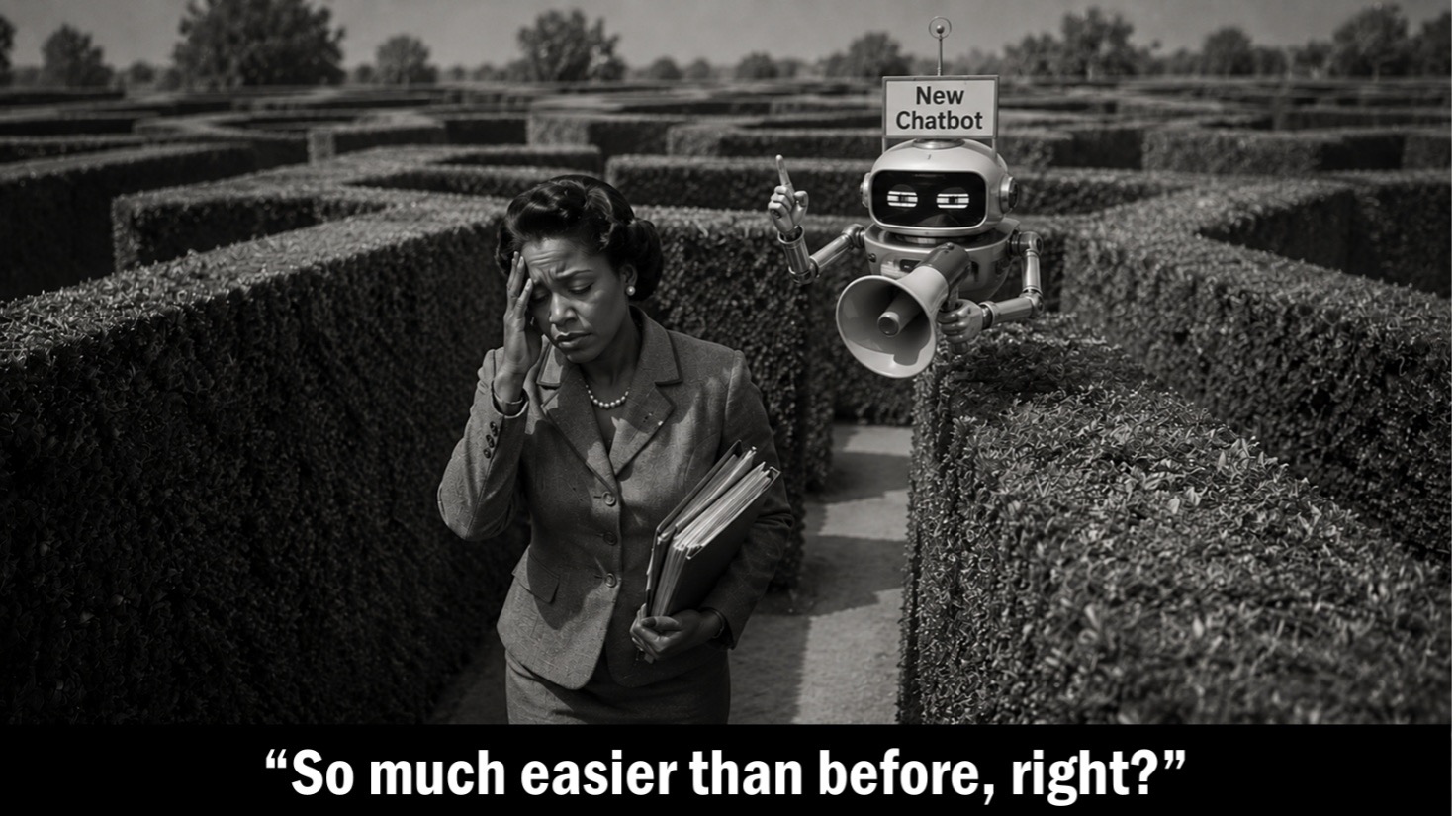
Once you build a chatbot for a bad process, something interesting happens. The chatbot develops a constituency. It has a project team, a budget line,...

Read More