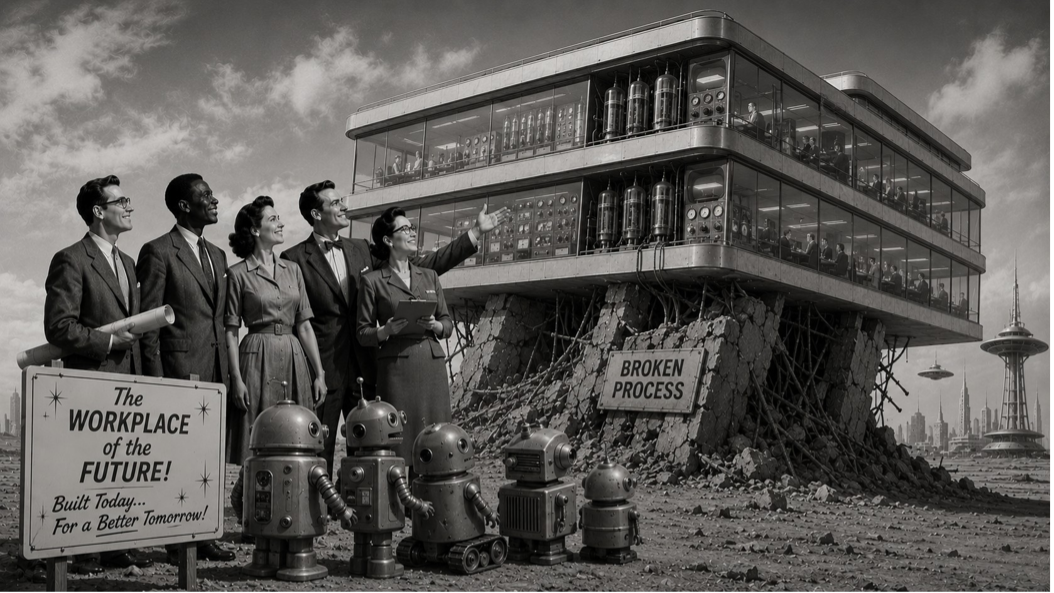
Chatbots: Are We Automating What Should be Eliminated?
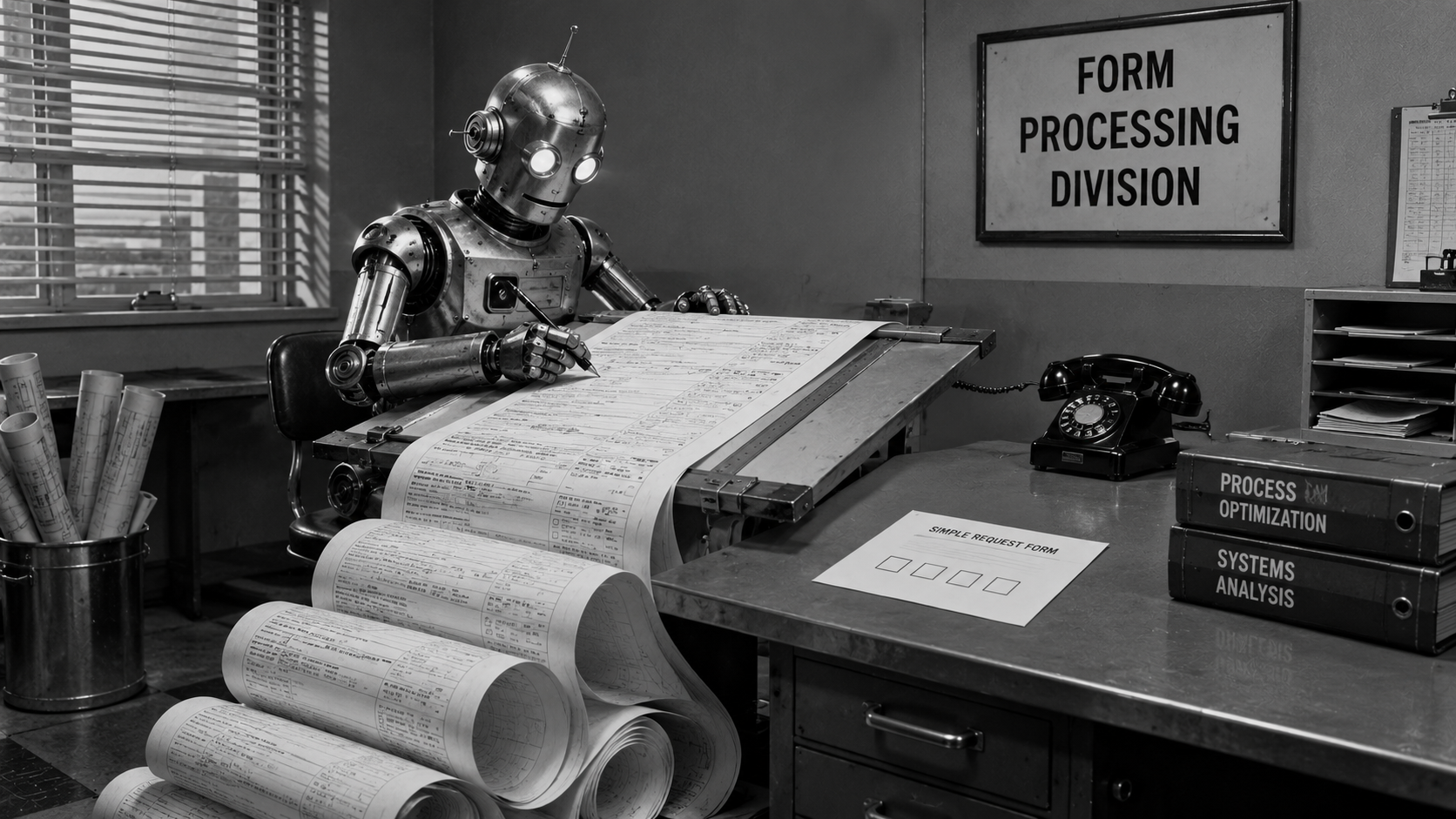
A chatbot won't fix a bad form. Before adding AI, ask whether the complexity should exist at all. The eliminate-first principle for process...
Recently Harvard Business Review ran an article titled "To Succeed with AI, You've Got to Nail the Basics".
The argument: instead of worrying about whether you are adopting AI fast enough, focus on getting five principles right - customer centricity, focus on process, commitment to acting on facts, a philosophy of continuous improvement, and recognition that quality happens through people.
Read that list again. Notice anything?
Those are Lean principles. Relabelled, renumbered, repackaged for a business audience - but Lean principles.
The quiet conclusion from a Harvard Business Review article is that the foundation organizations need for successful AI adoption is the same foundation they need for basically everything else as well. Lean has been that foundation since Taiichi Ohno and Deming in the 1950s and 60s. Now AI is the latest thing on top of it.
This has been the thread running through every post in this series.
All of it rests on one foundation:
You have to know how to improve a process without AI before AI is truly useful to you.
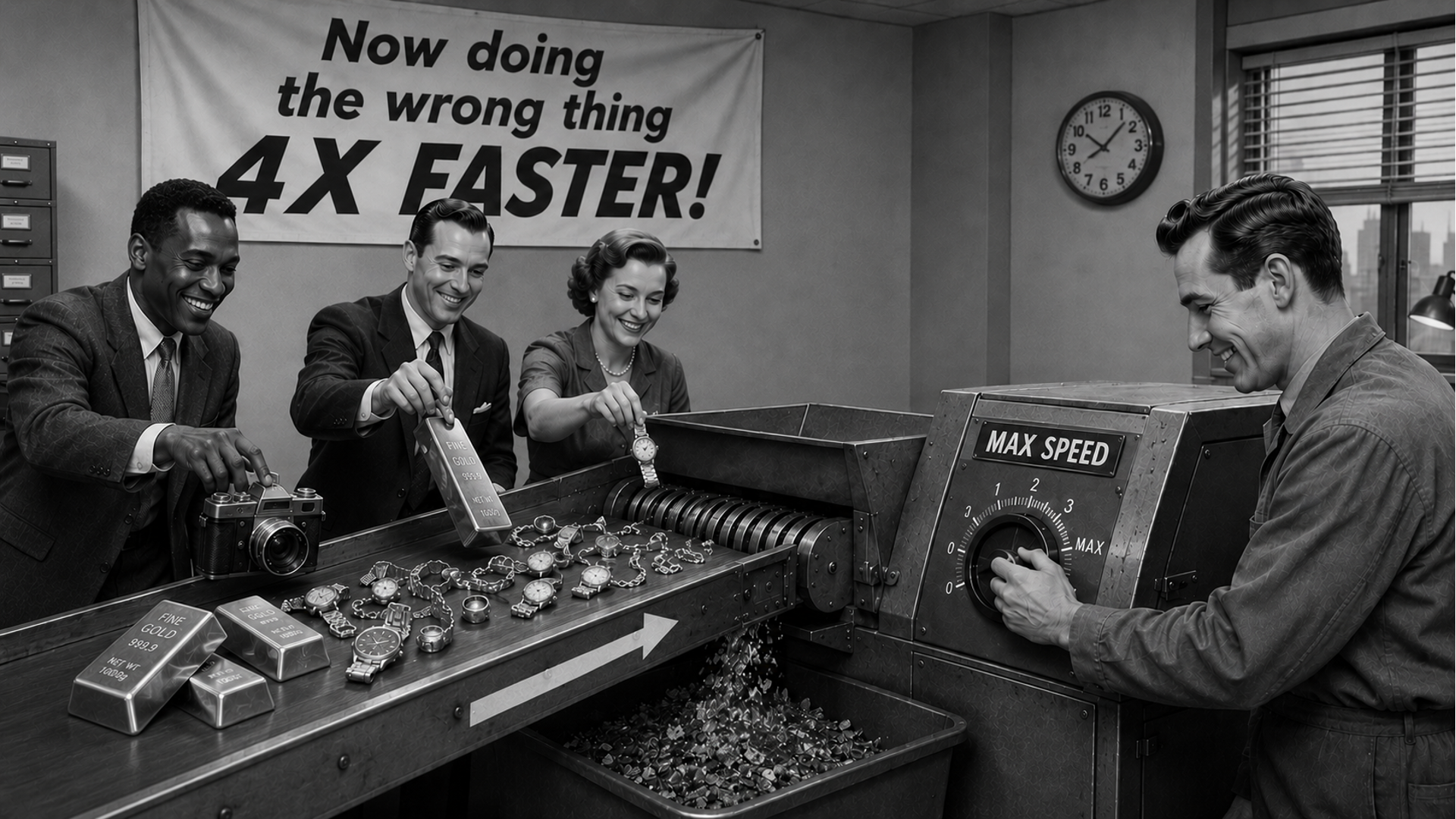
Organizations without that foundation will spend a lot of money and end up doing the wrong things faster.
Organizations with that foundation can use AI to expand value-adding work they previously lacked the capacity to do. That is the difference between AI as an amplifier of good process and AI as expensive noise.
Which brings me to the point that has been implicit in every post: this is why Lean training still matters.
Not because it is traditional. Not because it is a credential.
Not because it looks good on a resume.
Because it is the discipline that makes technology investment pay off.
McKinsey's 2026 analysis of AI skill gaps in operations found that only about one-third of surveyed manufacturing companies had scaled any AI solutions across their networks, and the number one reason cited for the gap was talent skill gaps. Not budget. Not tools. Skills.
The skills McKinsey is pointing at are, in my experience, Lean skills with a digital layer:
These are exactly the capabilities our top-performing clients have been building for years - long before AI came along.
If you have been building Lean capability in your organization, keep going. You are building the foundation AI needs.
If you haven't started, the fact that AI is now everywhere is the best argument for starting with Lean now - not in spite of the AI moment but because of it.
The organizations that will get the most from AI in 2026 and beyond are the ones that already know how to improve a process without it. The rest will be building chatbots on top of broken forms, writing prompts for processes that shouldn't exist, and wondering why their AI investment isn't paying off.
But what about technical skills like data engineering, prompt engineering, model evaluation, or agentic system design? Fair point. Lean is the foundation, not the entire stack.
The argument is not that Lean replaces those skills. It is that without Lean thinking, those skills get applied to the wrong problems. New technical capability only adds value when it is built on the right foundation.
Nail the basics first. Then nail them again. Then add AI - where it genuinely helps.
Key takeaways:
Explore our public training programs.
Training ProgramsTalk to us about a working session for your team.
Book a Consultation
A chatbot won't fix a bad form. Before adding AI, ask whether the complexity should exist at all. The eliminate-first principle for process...
Before you build a chatbot, ask these 5 questions. The first four are about form redesign. Only the fifth is AI. Save time, money, and complexity.
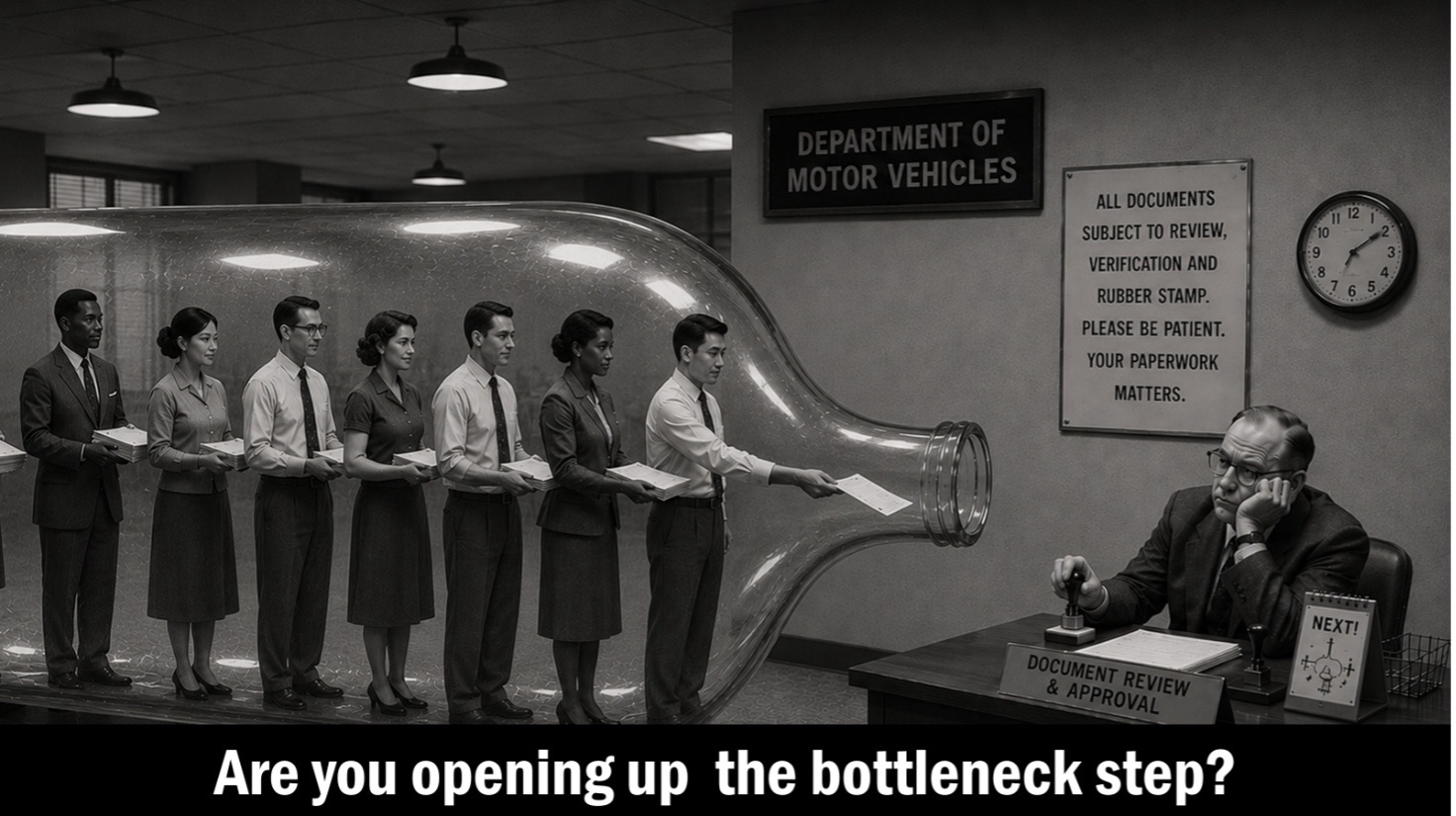
AI deployed on the wrong process step won't help your clients. Here's how to find the real bottleneck first, and why that matters more than the AI.