1 min read

Building Your Team the Smart Way - First Followers and the Art of Creating a Movement

Close-up photograph of a row of dominoes on a wooden conference table. The first domino lies flat, already fallen, while the second domino, painted bright orange, leans mid-tip against the next grey domino, setting off a chain reaction down the row into a softly blurred office background with window blinds and leather chairs.

One of the most common mistakes Lean practitioners make is spending enormous energy trying to convince every skeptic in the room.  They host information sessions that get ignored. They send emails that get archived. They push harder, and resistance pushes back. Sound familiar? 

Here's the truth: you don't need to get everyone on the bus. You just need to find the right people first.

We teach a principle that has changed how hundreds of public servants approach change in government: the First Follower. It comes from one of the most deceptively simple videos on the internet - Derek Sivers' famous Dancing Guy on the Hill. In under three minutes, it reframes everything you think you know about leadership and creating a movement. Watch it. Seriously.

The lone dancer on the hill isn't the hero of the story. The first follower is. Because that first follower is the one who transforms a lone nut into a leader. And then the next follower feels safe joining. And then the next. Before long, it's the people not joining who look out of place.
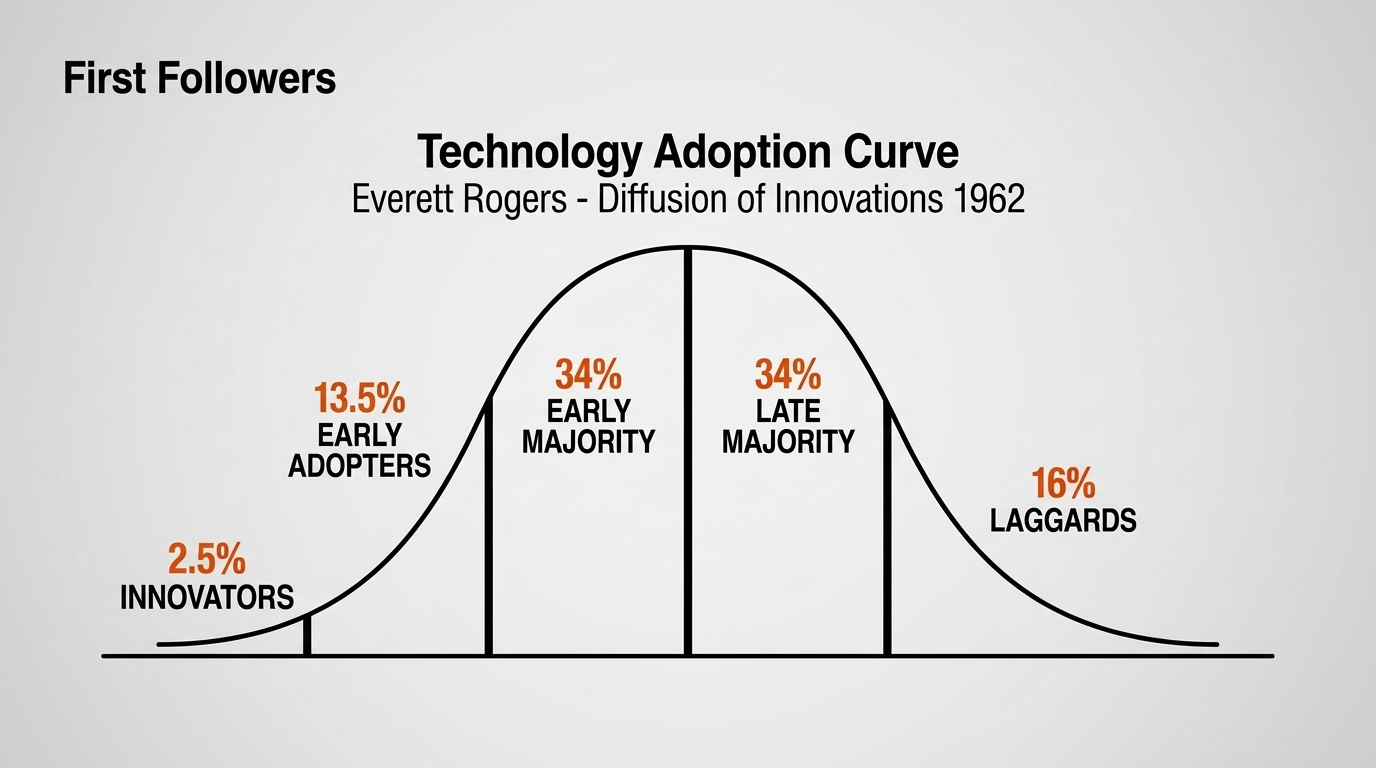
Bell curve diagram illustrating Everett Rogers' Technology Adoption Curve (Diffusion of Innovations, 1962), showing five adopter segments: Innovators (2.5%), Early Adopters (13.5%), Early Majority (34%), Late Majority (34%), and Laggards (16%).

This is the Technology Adoption Curve applied to Lean projects. Every team has innovators and early adopters - the colleagues who are curious, frustrated enough to want change, and influential enough that when they join, others pay attention. These are your people. They exist in every job group, every branch, every department. The ability to identify them, bring them in early, and let them do the selling for you is crucial - because their endorsement is worth ten times yours as an outsider or project lead.

Why does this matter so much? Because the wrong approach wastes months. You chase the skeptics, try to overcome objections, schedule more meetings, and end up exhausted before the real improvement work has even started. The right approach builds momentum quietly and then suddenly - and when it tips, it tips fast.

In government, where mandated change often triggers defensiveness and where the words “Lean project” can make people reach for their resistance hat, this distinction between pushing adoption and attracting it is not a nice-to-have. It is the difference between a successful project and a shelf-ware report.

If you've ever felt like you're dragging people toward a better process while they dig their heels in, this module will change how you work. You'll leave knowing exactly who your first follower is - and how to find them in every project you run from here forward.

Failure Demand: The Work That Should Never Exist

Failure Demand: The Work That Should Never Exist

Failure demand can eat up to 80% of a team's capacity, work that only exists because something upstream failed. Here's how to find it.

Read More
What Your Team Is Actually Afraid Of (And What to Do About It)

What Your Team Is Actually Afraid Of (And What to Do About It)

43% of workers fear AI will replace their job within two years. Ignoring that fear backfires. Here's the one commitment leaders must make before AI...

Read More
Root Cause Analysis - The 5 Whys Technique

Root Cause Analysis - The 5 Whys Technique

Learn how the 5 Whys method helps identify root causes, avoid symptom fixes, and drive lasting process improvement in lean organizations.

Read More